Biography
Hangrui Zhang is a Chinese composer based in London whose work treats music as an interdisciplinary practice. His music draws on visual art, pop culture, architecture, and machinery, pursuing a hybridity in which concepts and materials from different disciplines meet to spark new creative directions.
Zhang came to music late, beginning serious study in his early twenties and entering formal training at 23 in the United States. He holds a Bachelor of Music in Composition from the University of Cincinnati and a Master of Music from the Peabody Institute of The Johns Hopkins University. In 2019 he moved to London to study at the Royal College of Music, completing an Artist Diploma in Composition in 2020 and a Doctor of Music in 2025 under Kenneth Hesketh, Alison Kay, Ivan Hewett, and Matt Wright. His doctoral thesis examined how disciplines outside music can shape compositional thinking.
Collaboration is central to Zhang’s practice. He works regularly with artists on projects that place sound within wider audiovisual contexts. Music for Recycled Materials, an ongoing collaboration with designer Andrew Scott that builds instruments from waste and recycled materials, was presented at the 2021 London Design Biennale.
His music has been recognised by the American Prize, the ASCAP Morton Gould Young Composer Awards, and the Minnesota Orchestra Composer Institute, among others. His works have been performed by ensembles including Yarn/Wire, Neue Vocalsolisten Stuttgart, Explore Ensemble, the Donald Sinta Quartet, Eastman BroadBand Ensemble, Talujon Percussion Ensemble, and the St. Petersburg Improvisers Orchestra.
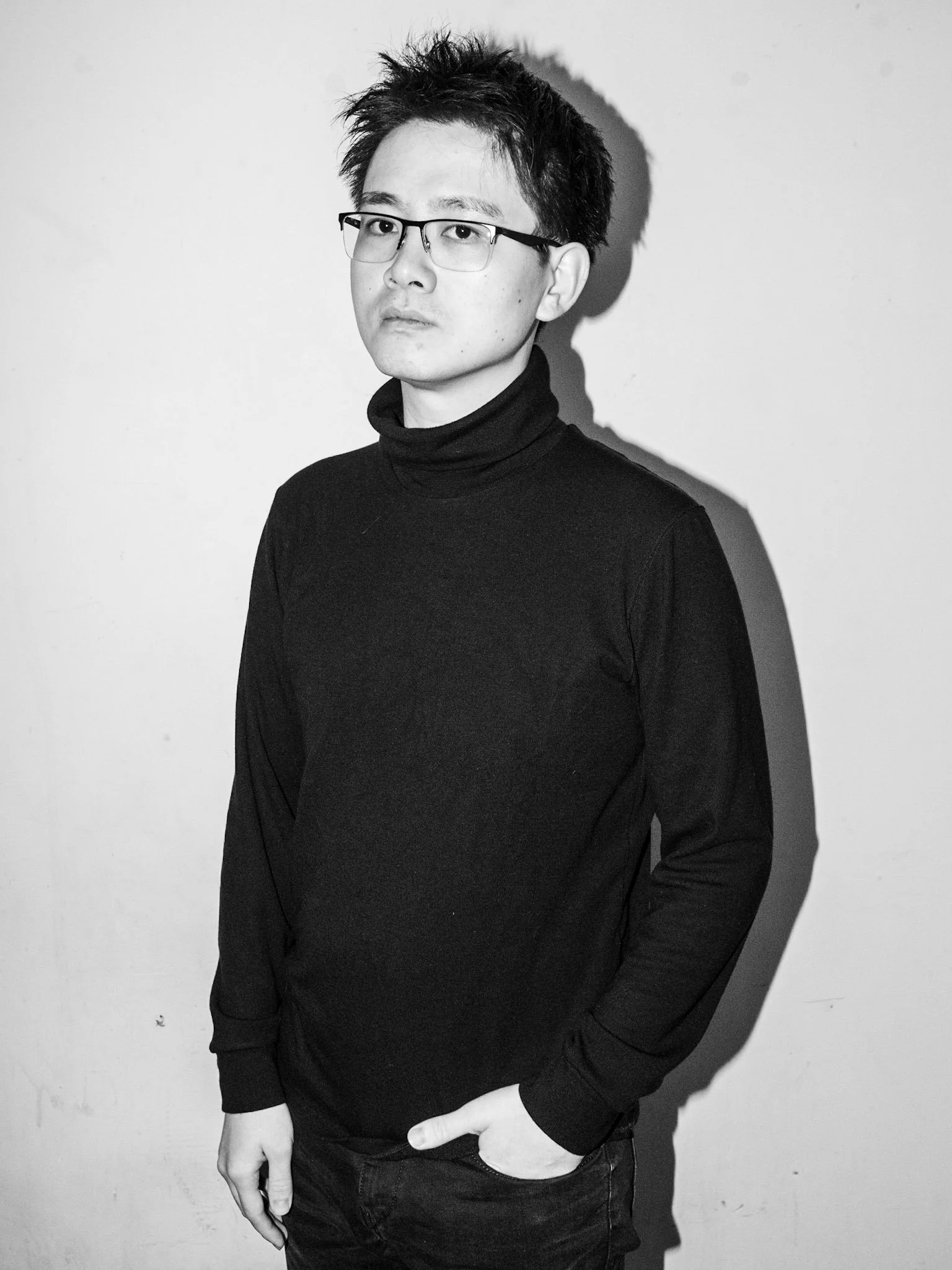
Artist Statement
I am a composer who treats music as an interdisciplinary practice that draws from a broad range of hybridised influences. My path into music was unconventional. I began learning seriously in my early twenties and entered formal training at 23. What might have looked like a late start became an advantage: it left me without a fixed idea of what music was supposed to be, and it fostered a broad curiosity and a habit of finding inspiration outside the concert hall. My influences come from a mixture of fields, including visual art, architecture, machinery, video games, and pop culture, and they are not decorative references. Wassily Kandinsky’s translation of music into colour and form has shaped how I think about texture and motif. The freedom and playfulness of video games inspire me to rethink how a score, and how I communicate with performers, can be creative.
I understand composition as a process of meditation and expression: an attentive practice of translating abstract ideas into sound and performance. The meditative dimension is not incidental: much of the early stage of a piece is slow and exploratory, spent sitting with an image or a fragment of sound until it begins to suggest its own shape. I am particularly drawn to artistic syncretism, in which materials and concepts from different disciplines intersect with music to spark new creative directions. This often means importing a logic from outside music and letting it shape the score. In Open World Alpha, a graphic score for improvisers, I borrowed the open-ended structure of open-world video games, where players move freely through a landscape rather than along a fixed path, and asked performers to navigate the music in the same spirit. The result behaves less like a finished object than like a space to be explored.
Collaboration sits at the centre of my work, and I value it as more than a means of production. Conversations with artists and performers from different backgrounds consistently open up pathways I would not have found alone. With the designer Andrew Scott I made Music for Recycled Materials, building instruments from waste and discarded objects and letting their physical character decide the sounds available to me. In this case the instincts and constraints of a collaborator reshaped decisions I had thought were already settled, and the friction between disciplines became part of the material itself. This way of working also shapes how the music reaches an audience: I co-curate live events that bring performers and visual artists onto the same programme, so the dialogue between disciplines carries on in the room rather than ending in the studio.
Alongside writing for acoustic instruments and electronics, I develop interdisciplinary projects where sound interacts directly with visual design and the conditions of performance. I am drawn to immersive, audiovisual formats that offer audiences a multi-sensory way of listening, allowing music to be experienced through space, image, and material as much as through sound. I am less interested in setting images to music, or music to images, than in building situations where the two cannot be pulled apart.
Underlying all of this is a question I keep returning to: what happens to authorship and artistic identity when so much of the work is made with others, and through technology? Rather than treat this as a threat to a singular voice, I see it as the condition my music is written in and the source of much of its energy. My aim is to create vivid, focused listening experiences: music that is tactile and image-driven, rigorously made, and open to the creative friction of collaboration.